What Sets Professional Septic Services Apart From DIY Fixes

A septic system is easy to ignore until it stops being easy. For many homeowners, it sits out of sight for years, doing its job quietly underground, handling everything that leaves the house through sinks, showers, toilets, and laundry lines. Then one morning the shower drains slowly, the toilet gurgles, and the patch of grass over the drain field looks suspiciously greener than the rest of the yard. At that point, the temptation to try a quick fix is understandable. A bottle from the hardware store costs less than a service call. A rented snake feels cheaper than pumping. Online videos make almost any repair look manageable.
But septic systems are not forgiving when they are misdiagnosed or mishandled. That is the dividing line between DIY fixes and professional septic services. It is not just about tools or licensing. It is about understanding how the whole system behaves under real conditions, recognizing what a symptom actually means, and knowing which intervention solves the problem without creating a larger one.
People often assume a septic issue is similar to a routine plumbing clog. Sometimes it is, but often it is not. A kitchen drain can be blocked by grease. A bathroom line can be slowed by hair or paper. A septic system involves a tank, inlet and outlet baffles, bacterial action, sludge and scum layers, distribution lines, soil absorption, groundwater conditions, and usage patterns inside the home. A problem in one part can show up somewhere else entirely. That complexity is where professional judgment matters most.
A septic system is a living, working system, not just a buried tank
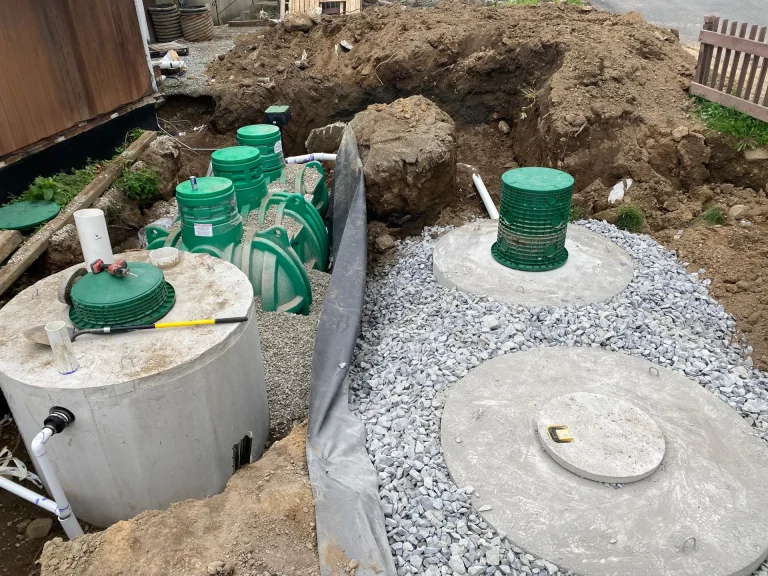
The biggest mistake homeowners make is seeing the septic tank as a standalone container that only needs occasional pumping. In reality, the tank is only one part of a treatment and disposal chain. Wastewater enters the tank, solids settle to the bottom, oils and lighter materials rise, and partially clarified effluent moves out toward the drain field. The soil then does the final treatment work.
That process depends on balance. Too many solids flowing out of the tank can clog the field. Too much water entering too quickly can overload it. Harsh chemicals can disrupt bacterial activity. Heavy vehicles crossing the area can crush components or compact soil. A homemade fix that addresses one visible symptom, such as a slow toilet or standing water, can easily miss the hidden cause.
Professionals approach the system as a whole. They do not just ask what is backing up. They want to know when the issue started, whether it affects one fixture or the entire house, whether the tank has been pumped recently, whether there has been heavy rain, whether the household size has changed, and whether there have been recent additions like a garbage disposal or a new washing machine. Those details shape the diagnosis.
I have seen homes where the owner was convinced the drain field had failed because sewage was backing into the basement. The real issue was a collapsed building sewer line between the house and the tank. I have also seen the opposite, where repeated snaking bought a few extra weeks each time, while the actual problem was a saturated field that could no longer accept effluent. Treating those two situations the same wastes money and time.
Diagnosis is where professional septic services earn their value
The visible symptom is rarely the whole story. Slow drains, odors, wet spots, and backups can all stem from several different causes. The skill lies in narrowing down the possibilities without jumping to the first obvious answer.
A professional technician looks for patterns. If only one sink is slow, that points toward an indoor plumbing issue. If every fixture in the house is sluggish, especially the lowest drains, the problem may be farther downstream. If there is sewage odor outdoors near the tank lids or field, that can indicate leakage, venting issues, or overload. If standing water appears only after storms, surface drainage may be contributing. If the grass over the field is vivid and spongy in dry weather, the field may be releasing effluent too close to the surface.
Good septic services also involve locating and exposing access points properly. Many homeowners do not know exactly where the tank is, where the lids are, or where the distribution box sits. Guessing often leads to unnecessary digging and damaged landscaping. A trained crew can identify the layout more efficiently, inspect key components, and determine whether the issue is in the house line, the tank, the outlet, the distribution network, or the field.
This is where experience changes the outcome. A less qualified person may see a full tank and assume pumping solves everything. A seasoned septic professional knows that every working tank is supposed to be full to the outlet level. The more important question is what is happening with the solids layers, the flow through the baffles, and the condition of the field beyond it. Pumping may be necessary, but by itself it does not explain why the backup happened.
The risk of treating symptoms instead of causes
DIY fixes are usually symptom driven. The toilet bubbles, so someone uses an auger. The drain smells, so someone pours in an additive. Water pools outside, so someone adds topsoil and hopes it dries out. Those responses are understandable, but they are often based on guesswork.
The problem with guesswork in septic work is that the system can appear to improve briefly while the underlying damage worsens. A partial clog can be opened enough to restore flow for a week or two. A field under stress can temporarily recover during a dry spell, then fail again after a few loads of laundry. Some additives can stir solids or break them into smaller particles that move downstream, which is the last place you want excessive solids to go.
Once solids reach and clog the drain field, repair options become more limited and more expensive. A tank pumping that might cost a few hundred dollars can turn into field rehabilitation, partial replacement, or full system replacement that runs into the thousands or, in difficult sites, much more. That gap is one reason professional septic services are not just an added expense. They are often the cheaper path when measured against the cost of getting it wrong.
Professional equipment reveals what the eye cannot
Another major difference is access to specialized equipment. Homeowners can rent some plumbing tools, but septic diagnostics and service often require gear that is expensive, technical, and only useful in trained hands.
A professional crew may use inspection cameras to examine sewer lines, probes or electronic locators to find tanks and piping, sludge judges or measuring tools to assess solids depth, and vacuum trucks designed to remove and transport waste safely. For more advanced systems, there may also be pumps, filters, alarms, floats, and electrical controls that need testing.
The vacuum truck alone changes the nature of the job. Proper pumping is not simply sucking out whatever is easy to reach. The contents need to be removed thoroughly enough to allow inspection of the tank interior, baffles, tees, and structural condition. If the tank is not cleaned properly, the owner may believe maintenance was completed when it was only partial. If the tank walls or lids are cracked and that is missed, infiltration or collapse may follow.
Then there is disposal. Septic waste is regulated for good reason. It has to be transported and discharged at approved facilities. A professional company handles that process as part of its service. A homeowner attempting improvised waste handling is not just taking a health risk, but potentially creating an environmental and legal problem as well.
Safety is not an abstract concern
Septic work carries hazards that many people underestimate because the system is part of a home, not a factory or industrial site. Yet tanks contain toxic gases, low oxygen environments, and biological hazards. A damaged or unsecured lid can be deadly. Even leaning into an opening can be dangerous under the wrong conditions.
There is also the risk of structural failure. Older tanks, especially steel or deteriorated concrete units, may have weak tops or compromised walls. Soil around them may be unstable after rain. Digging around lids without understanding the tank dimensions or depth can create cave-in hazards or damage components that were functioning before the excavation started.
A professional team works with procedures designed around these risks. They know how to expose lids safely, ventilate where appropriate, avoid unnecessary entry, secure the work area, and identify structures that are no longer sound. They also carry insurance and are expected to meet local requirements. That matters if something goes wrong.
For homeowners, the danger often lies in treating septic work like ordinary yard maintenance. It is not. Few savings justify taking chances around confined-space gases or deteriorated tank covers.
Experience shows up in the gray areas
Most people picture service in black and white terms. Either the tank needs pumping or it does not. Either the line is blocked or it is clear. Real septic problems are usually more nuanced.
Consider a house used by two retirees for most of the year that hosts extended family every holiday season. The tank may behave perfectly under normal use and then show stress when ten people are showering, doing laundry, and running dishwashers for a week. That does not automatically mean the field has failed. It may mean the system is marginal under peak load, the filter needs cleaning, the pumping interval is overdue, or water use habits need adjustment during heavy occupancy.
Or consider a property after weeks of rain. The owner may notice soggy ground and conclude the septic system is leaking. In some cases, it is simply surface water following the same low area where the field was installed. In other cases, the field really is struggling because the surrounding soil is saturated and can no longer absorb effluent efficiently. Distinguishing between those scenarios takes site judgment, not just a glance.
This is where professional septic services stand apart. A seasoned provider can say, with restraint, what is known now, what still needs testing, and which low-cost steps make sense before larger repairs. That restraint is valuable. Good technicians do not oversell replacement when maintenance and monitoring might solve the problem. Just as importantly, they do not offer false reassurance when a system is clearly near the end of its service life.
Cheap fixes often ignore the drain field, which is where the real money is
If the septic tank is the heart of the system, the drain field is the lungs. It needs to breathe through the soil, disperse effluent evenly, and stay unsaturated enough to finish treatment. Damage to the field is often gradual and expensive to reverse.
Many DIY efforts focus on what is accessible, the indoor drains, the cleanout, the tank opening. That makes sense from a convenience standpoint, but it ignores the most vulnerable and costly part of the system. The drain field can be damaged by years of missed pumping, by roof drains discharging into the area, by driving over it with trucks, by root intrusion, or by constant hydraulic overloading from leaking toilets and high water use.
A professional does more than restore flow. They look at how to protect the field from future harm. That might involve adjusting pumping intervals, installing or cleaning an effluent filter, redirecting surface runoff, repairing leaking fixtures, or advising against activities that compact the soil.
One homeowner I dealt with was sure the field had failed permanently because effluent surfaced near the end of the trenches every spring. The field itself was aging, but the immediate problem was aggravated by a sump pump discharging uphill from the same area. Every storm added hundreds of unnecessary gallons to already wet ground. Once the drainage was corrected and the tank was serviced properly, the system bought several more years of usable life. That kind of result rarely comes from a bottle treatment or a rented auger.
Additives and store-bought remedies deserve skepticism
There is a persistent market for septic treatments sold as easy maintenance or emergency cures. Some promise to restore bacterial balance. Others claim to clear clogged fields or eliminate pumping. The appeal is obvious. Pour something in, avoid the mess, and save money.
The problem is that most septic systems already contain the bacteria they need from normal household waste. What they need more often is regular pumping, sensible water use, and protection from physical damage. Additives are not a substitute for removing accumulated solids. A tank that is too full of sludge does not need a miracle liquid. It needs service.
That does not mean every product is worthless in every scenario, but homeowners are usually in no position to judge when one has a limited role and when it is just marketing. Professionals are more likely to view these products as secondary at best. They rely on inspection findings, not label promises.
Warning signs that call for expert attention usually look like this:
- Multiple drains in the house slow down or back up at the same time.
- Sewage odors appear indoors or around the tank or drain field.
- Wet, spongy, or unusually green ground develops over septic components.
- Toilets gurgle when other fixtures drain, especially on the lowest floor.
- It has been several years since the last confirmed pumping, and usage has increased.
None of those signs automatically means catastrophe, but they do mean the system deserves a real diagnosis.
Regulation, permitting, and records matter more than people expect
Septic systems are tied to local health codes, setbacks, soil conditions, and property records. A DIY repair can create trouble that only becomes visible later, often when the home is sold or when a permit is needed for another project.
Professional septic services typically work within the local https://juliusumah391.theburnward.com/how-to-choose-the-right-company-for-septic-services regulatory framework. They know when a repair needs approval, what documentation should be kept, and how local inspectors or health departments interpret system requirements. That may sound bureaucratic, but it affects real costs and decisions. Replacing a distribution box, altering a pump chamber, or modifying field components may not be something you want to do casually and explain later.
Records also matter for maintenance planning. A documented pumping date, measured sludge depth, observed condition of baffles, and note on filter cleaning provide a baseline. Without that history, every problem starts from zero. With it, a technician can see patterns, estimate intervals, and catch decline before it turns into failure.
For buyers, this becomes even more important. A home with a septic system that has been professionally maintained and documented is easier to evaluate than one where the owner says it has "always been fine." Underground systems do not reward optimism.
Time and cost look different when you account for rework
DIY work often appears cheaper because it counts only the first attempt. It does not count the rented equipment that did not reach the actual blockage, the additives that changed nothing, the landscaping disturbed during trial-and-error digging, or the emergency service call that becomes necessary on a weekend after the temporary fix fails.
Professionals cost more upfront because they bring labor, equipment, transport, training, and liability coverage. But they also compress the path to the right answer. If a technician identifies a plugged effluent filter, overdue pumping, and surface drainage problem on the first visit, that diagnosis can save weeks of frustration and prevent unnecessary replacement talk.
There is also value in knowing what not to do. A capable septic provider may tell a homeowner not to pump a tank repeatedly as a routine workaround for a failed field, because that can mask the urgency of a larger repair and increase long-term cost. Or they may advise delaying nonessential water use after heavy rain rather than scheduling invasive work immediately. Practical judgment like that rarely shows up in a DIY tutorial, but it saves people money.
What to look for in a septic company
Not every service provider is equally thorough, and homeowners should be selective. The right company will explain what they observe, what they recommend, and what remains uncertain. They will not speak in absolutes where none exist.
A short checklist helps:
- Ask whether they inspect baffles, filters, and tank condition during pumping.
- Ask how they determine whether the issue is in the house line, tank, or field.
- Ask what maintenance records or service notes they provide afterward.
- Ask whether they handle permits or coordinate with local authorities when needed.
- Ask what steps they recommend to extend the system's service life.
Those questions reveal a lot. Companies that focus only on fast pumping may still be useful, but more complete septic services offer greater long-term value because they connect maintenance to diagnosis and prevention.
The real difference is judgment
Anyone can chase a clog. What sets professional septic services apart is judgment built from repetition, pattern recognition, and accountability. Professionals know that a backed-up drain may be a plumbing issue, a septic issue, or both. They know that a full tank is normal, but a missing outlet baffle is not. They know when soggy ground is weather related and when it signals system stress. They know that preserving the drain field is often the central goal, because once that part fails, options get expensive fast.
DIY fixes have a place at the edges. Homeowners should absolutely practice sensible habits, spread out laundry loads, avoid flushing unsuitable materials, keep vehicles off the field, and stay aware of maintenance intervals. But when symptoms point beyond ordinary household care, expertise matters. The underground nature of the system hides mistakes until they become costly.
The best professional work often looks uneventful from the outside. A tank gets pumped properly. A filter gets cleaned. A lid gets sealed. A line gets scoped. A drainage issue gets corrected before it ruins the field. No dramatic rescue, just disciplined service at the right time. That is exactly the point. With septic systems, the smartest fix is usually the one that keeps a bad day from turning into a replacement project.
Excavating New Jersey LLC
Address: 406 County Rd 565, Wantage, NJ 07461
Phone number: +19737914284
FAQ About Septic Services
What is the average cost to get a septic tank emptied?
Emptying a septic tank costs between $290 and $560 on average, with most homeowners paying about $420. Prices vary based on tank size.
What is septic service?
Septic service inspects, pumps, cleans, and maintains a septic tank. A septic tank is a large, underground container that collects and treats wastewater from your home. Over time, sludge, scum, and other debris, like hair and solids, can build up in your tank and clog your drain field.
How often should you have a septic tank serviced?
A standard septic tank should be inspected every 1 to 3 years and pumped every 3 to 5 years. However, the exact schedule depends on your tank's capacity, household size, and daily water usage.