Norweco Singulair Green Wantage NJ: What Makes It Different?
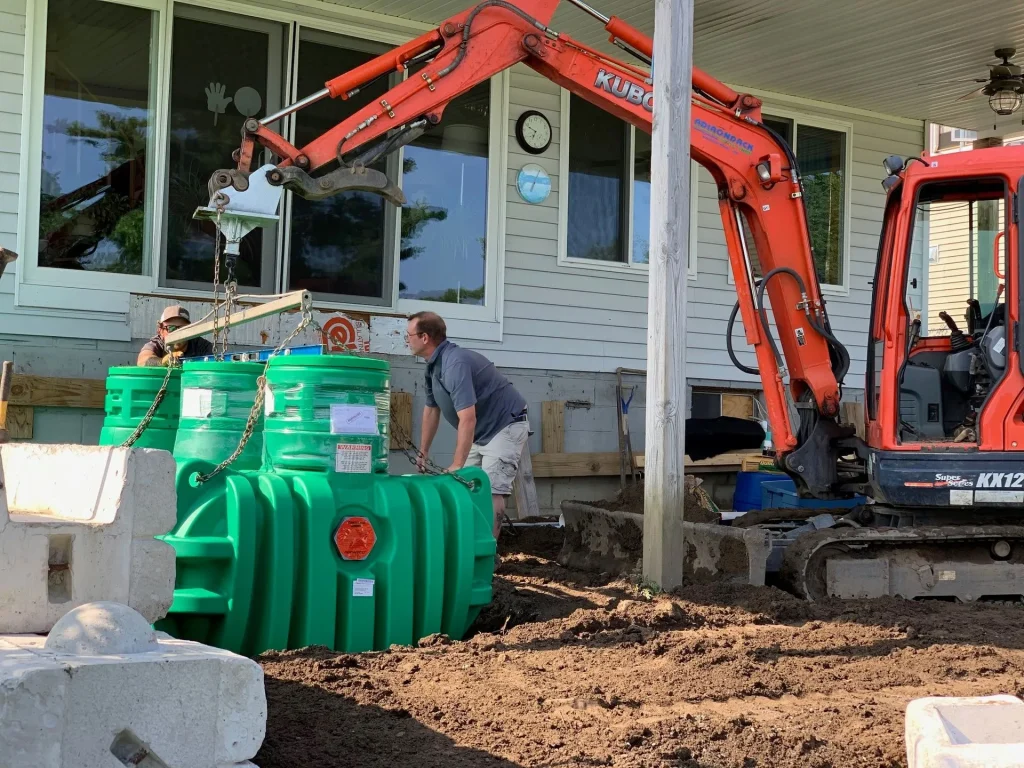

If you spend any time around onsite wastewater systems in Sussex County, you learn quickly that not every property is an easy fit for a conventional septic setup. Wantage has the same mix of challenges that show up across much of northern New Jersey: rolling lots, seasonal groundwater changes, older homes with outdated systems, and parcels where space for repair fields is tighter than owners expected when they bought the place. That is where treatment units such as the Norweco Singulair Green tend to enter the conversation.
People often hear the name and assume it is simply a more expensive septic tank with a marketing label attached. That is not really the story. The reason homeowners, installers, engineers, and local officials pay attention to systems like the norweco singulair green Wantage NJ option is that it is designed to treat wastewater to a higher standard than a basic septic tank alone. In the right setting, that difference matters a great deal. In the wrong setting, or in the hands of an owner who expects a no-maintenance miracle, it can be misunderstood.
The useful question is not whether it is “better” in the abstract. The useful question is what it does differently, why that difference matters on a Wantage property, and what trade-offs come with choosing it.
It is not just storage, it is active treatment
A conventional septic tank does one primary job well: it separates solids from wastewater. Heavy solids settle, grease and lighter material float, and partially clarified effluent moves on to the soil absorption area. The real treatment happens largely in the soil. When the site conditions are favorable, that simple approach can work for many years.
A system like the Singulair Green is built around a different idea. Instead of relying so heavily on passive settling and soil alone, it actively treats wastewater before it reaches the dispersal area. That active treatment usually involves aeration and a controlled biological process that encourages aerobic bacteria, the kind that thrive where oxygen is available. Those organisms break down waste more aggressively than the mostly anaerobic activity found in a standard septic tank.
That shift from passive separation to managed treatment is the core difference. It is the reason these systems are often considered for lots where the margin for error is smaller. Cleaner effluent can reduce the burden on downstream disposal components. On sites with difficult soils or design constraints, that can be the factor that makes a project approvable, or at least more practical.
This is also where many homeowners form the wrong expectation. Cleaner effluent does not mean no field, no maintenance, or no operating costs. It means the wastewater has gone through more treatment before it enters the next stage.
Why Wantage properties sometimes need something more sophisticated
Wantage is not identical from one road to the next. One property may have plenty of usable area and decent soils. Another may have rock, slope, wet periods, or setbacks that make a standard design hard to place. In my experience, advanced treatment systems usually become attractive for one of three reasons: site limitations, replacement of a failing older system, or a new build where preserving as much usable land as possible matters.
On a constrained lot, every design decision becomes more important. If wastewater can be treated to a higher quality before discharge to the disposal area, the engineer may have more flexibility in how the overall system is configured, subject to local and state rules. That does not mean a homeowner can skip engineering or permits. It means advanced treatment can widen the design toolbox.
Older homes are another common trigger. A house built decades ago may have a system that predates current expectations. Bedrooms may have been added. Water use patterns may have changed. Sometimes the original field is tired, surfacing, or backing up in wet weather. Retrofitting those sites is rarely simple. When conventional replacement is hard to fit, an aerobic treatment unit can become part of the solution.
There is also a practical quality-of-life factor. On properties where owners care about protecting wells, streams, or shallow groundwater, better pretreatment is not just a code issue. It is a stewardship issue. That concern tends to be stronger in communities where people are acutely aware of private well water and the long-term value of clean land.
What makes the Singulair Green concept stand out
The Singulair Green line is associated with fixed, integrated treatment rather than a patchwork of separate components improvised in the field. For many homeowners, that matters less than the sales brochures suggest. For installers and service providers, it can matter quite a bit. A system that has a defined treatment sequence, known operating parameters, and manufacturer guidance tends to be easier to monitor and service than a loosely assembled substitute.
Another distinction is that these systems are intended to produce consistent effluent quality when they are installed properly and maintained on schedule. That consistency is a major part of the value. Conventional septic systems can perform very well under the right conditions, but norweco singulair green Wantage NJ Excavating New Jersey LLC they rely more heavily on the site itself. Advanced treatment units are meant to reduce variability before the water ever reaches the soil.
That said, consistency has a price. Systems with motors, blowers, controls, or alarms introduce components that eventually wear out. A power interruption affects operation. A neglected maintenance schedule catches up with the owner. The extra treatment is real, but so are the responsibilities.
This is one of the most important points for anyone evaluating norweco singulair green Wantage NJ installations. The system is different not because it defies the rules of wastewater treatment, but because it asks the owner to participate in a more managed process.
The cleaner effluent changes the conversation downstream
When installers talk about “protecting the field,” they are getting at something homeowners can actually understand. A soil dispersal area does not fail only because of age. It often fails because too much suspended material, grease, or untreated organic loading reaches it over time. The pores in the soil interface can clog. Once that happens, the field cannot accept water efficiently, and trouble follows.
Better pretreatment can reduce that load. In practical terms, that may help the disposal area perform more reliably. On a difficult site, that is a serious advantage. If you are repairing a system where replacement area is limited, anything that helps preserve the life of the downstream components deserves attention.
There is no honest way to promise a specific lifespan because performance depends on design, installation quality, usage, groundwater conditions, and maintenance. Still, the principle is sound. Cleaner water going out usually means less stress on what comes after.
For a Wantage homeowner, that can translate into fewer wet spots, fewer odor issues, and less risk that an expensive repair field becomes the next headache. It is not immunity. It is risk reduction.
Maintenance is where the romance ends and reality begins
Advanced treatment systems tend to sound attractive when people hear the words “better treatment.” They become less glamorous when the service agreement comes up. That is not a flaw in the technology. It is simply part of owning equipment instead of just a buried tank.
A homeowner considering this type of system should expect periodic inspections and pumping at intervals based on use and system condition. Pumping frequency can vary widely. Many residential tanks, depending on size and occupancy, need service somewhere in the range of every few years, but the correct schedule depends on the actual installation and local requirements. Mechanical components also need checks. Aeration equipment, alarms, and internal parts do not benefit from neglect.
The houses that do best with these systems are usually the ones where owners are organized. They keep records. They respond when alarms go off. They do not treat the plumbing like a garbage can. They understand that “flushable” on a package often means “not ideal for your wastewater system.”
Here is where experience matters more than brochures. Most system failures I have seen or heard described were not caused by some mysterious defect. They came from one of the usual problems: no service for years, excessive water use, wipes and grease, ignored alarms, damaged components, or site drainage issues that were never corrected.
What owners should expect from day to day
From the homeowner’s perspective, a properly functioning unit should be mostly uneventful. You are not supposed to interact with it constantly. If the system is sized correctly, installed well, and maintained, daily life looks ordinary. Toilets flush, showers drain, laundry runs, and the yard stays dry.
The difference is mostly hidden. It shows up in the background, in the treatment process you do not see. Some owners may hear equipment faintly depending on the system location and setup, but that varies. The bigger day-to-day change is psychological: you become aware that the system is not purely passive.
That awareness is healthy. Homes on private septic should never be treated as if infrastructure is someone else’s problem. Municipal sewer users can remain blissfully detached because a utility stands between them and the consequences. Septic owners do not have that luxury. Advanced treatment just makes that relationship more explicit.
Where it can be a strong fit
Certain situations tend to make this style of system more compelling:
- A property has limited usable area for a conventional design.
- A failing older system needs replacement under tighter current standards.
- Soil or groundwater conditions make higher pretreatment valuable.
- The owner wants a more protective approach near wells or sensitive land.
- The project depends on an engineered solution rather than a simple tank-and-field layout.
That list does not replace engineering review, but it captures the broad pattern. The more constrained the site, the more attractive advanced pretreatment often becomes.
The trade-offs are real, and they should be discussed plainly
One reason some homeowners get frustrated is that advanced systems are sometimes presented only as an upgrade, not as a bundle of obligations. A fair evaluation needs both sides.
First, initial cost is usually higher than a basic septic arrangement, though the total project cost can only be judged against the site. On some lots, a conventional design may not even be a viable apples-to-apples comparison. Second, operating costs exist. Electricity use for treatment equipment is not usually ruinous, but it is part of ownership. Third, service contracts and inspections add recurring expense. Fourth, more components mean more potential points of failure, even if those failures are manageable.
On the other hand, those costs may be easier to accept when the alternative is a difficult redesign, a compromised field layout, repeated repairs, or the inability to develop the property as planned. That is why the phrase “What makes it different?” cannot be answered with a simple feature list. The real difference is how it changes what is possible on a site and what is expected from the owner afterward.
Local context matters more than brand loyalty
In septic work, brand arguments can become strangely tribal. One contractor likes one manufacturer. Another prefers a different one. Homeowners are then left trying to decode sales language. The better approach is to start with the property and the local approval environment, then look at technologies that fit.
For a norweco singulair green Wantage NJ project, the relevant questions are practical. What do the soil evaluations show? What are the setback requirements? Is this a new installation or a repair? How many bedrooms is the home approved for? What does the engineer recommend, and why? Who will service the unit after installation? How quickly can parts and support be obtained if something goes wrong?
Those questions matter more than a polished brochure. A technically good system installed poorly is still a bad outcome. A strong design without local service support is also a risk. I have seen owners focus intensely on equipment details while barely asking who will maintain it five years later. That is backwards.
Installation quality often decides whether the system earns its reputation
There is a hard truth norweco singulair green Wantage NJ in wastewater work: many system “brand problems” are really installation, sizing, or maintenance problems wearing a different name tag. If tanks are set poorly, grades are wrong, electrical work is sloppy, controls are ignored, or site drainage is mishandled, the owner will not care which manufacturer’s logo was on the paperwork.
A high-quality installation usually shows itself in boring ways. The contractor coordinates cleanly with the engineer. Elevations are checked instead of guessed. Access risers are sensible. Electrical connections are protected. Surface water is diverted away from critical areas. Startup and owner education are not treated as afterthoughts.
That last part is underrated. Homeowners need to know what alarm conditions mean, who to call, what not to flush, and what pumping or inspection schedule applies. When the installer or service provider takes twenty extra minutes to explain the system properly, it can prevent years of misuse.
Questions worth asking before you commit
A homeowner does not need to become a wastewater engineer, but asking the right questions can save a great deal of confusion later. The following are worth raising during design or proposal review:
- Why is this system being recommended for this specific lot?
- What maintenance schedule should I realistically expect?
- Which components require power, inspection, or eventual replacement?
- Who services this model locally, and how often do they work on it?
- What owner habits are most likely to shorten system life?
Notice that none of those questions ask whether the system is “the best.” That is because the best system is the one that fits the property, meets regulatory requirements, has reliable service support, and can be cared for by the owner without wishful thinking.
How it compares with a conventional septic mindset
A conventional septic setup encourages passivity. Once it is buried, owners tend to forget it. Sometimes they forget it for too long. That mindset can survive even when someone upgrades to advanced treatment, and that is where trouble starts. The Singulair Green type of system asks for a different relationship. You still live normally, but you accept that wastewater treatment is an active utility on your property.
That difference can actually be a benefit. Owners who stay engaged usually spot issues earlier. They know where records are. They know the service company. They are less likely to pave over something important or route roof runoff where it does harm. A little awareness pays off.
At the same time, this is not the right fit for everyone emotionally. Some people genuinely want the simplest possible system and are prepared to buy only properties where that simplicity is feasible. That is a fair preference. Others are happy to accept a more sophisticated system because it unlocks a site they love or provides more confidence in a challenging setting.
The environmental angle, without the sales gloss
There is a reason systems like this are often framed as “greener.” Higher-quality treatment before dispersal can reduce pollutant loading to the soil and groundwater. On paper, that sounds straightforward. In practice, the environmental benefit depends on continued operation and proper maintenance. A neglected advanced unit is not environmentally virtuous just because it once left the factory with impressive performance claims.
Still, when these systems are used as intended, the environmental case is meaningful. Better treatment can be especially relevant in regions where homes depend on private wells and where the cumulative effect of many onsite systems matters. Wantage is not a place where groundwater concerns feel abstract to most property owners. When your drinking water is tied closely to the local aquifer, wastewater treatment quality stops being a distant policy issue and becomes personal.
That is one reason this topic deserves a more serious answer than “it’s a premium septic system.” It is a tool for managing wastewater more intensively where conditions or values justify that effort.
So what really makes it different?
What makes the Norweco Singulair Green stand apart on a Wantage property is not one flashy feature. It is the combination of active treatment, cleaner effluent, better fit for constrained or sensitive sites, and a higher level of owner responsibility. Those pieces belong together. If you remove the maintenance piece from the story, you are not evaluating the system honestly. If you ignore the treatment benefit, you are also missing the point.
For some properties, a conventional septic system remains the simplest and most sensible choice. For others, especially where design constraints tighten the margins, the norweco singulair green Wantage NJ option can be a practical and defensible answer. The system earns its value when its strengths line up with the realities of the lot and when the owner is prepared to support it over time.
That is the real difference. It is not just another tank underground. It is a managed wastewater treatment process installed at a residential scale, useful precisely because some sites in Wantage need more than the conventional playbook can offer.
Excavating New Jersey LLC
406 County Rd 565
Wantage, NJ 07461, United States
Phone: +1 (973) 791-4284
FAQ About norweco singulair green Wantage NJ
How does a Norweco septic system work?
Singulair Green uses aerobic biological treatment in a polyethylene tank, followed by settling and filtration. The treatment unit is one part of a complete wastewater system; the site design also determines how treated effluent is dispersed.
How much does a Norweco septic system cost in NJ?
A useful estimate requires a property evaluation. Excavation access, soil conditions, engineering, electrical work, the disposal field, and restoration can affect the total. Ask Excavating New Jersey LLC for a written scope that distinguishes installation costs from ongoing service costs.
Are Norweco septic systems good?
Singulair Green is an established aerobic treatment option, but suitability depends on the property and proposed design. Compare the model's documented performance, maintenance needs, and total project scope with alternatives before deciding.